
Protetics
TIA dentico, Begrade - Protetics
Our Prosthetic Services – A Complete Smile Transformation Whether you need veneers, bridges, crowns, partial or full dentures, our expert team is dedicated to restoring both function and aesthetics to your smile. In addition to traditional impression techniques, we also use a state-of-the-art scanner that enhances comfort and efficiency.
This scanner captures highly precise images of your teeth and oral cavity, streamlining communication with our dental lab and allowing you to actively participate in planning and exploring treatment options through our Digital Smile Design program—ensuring predictable results.
By combining high-quality materials with meticulous prosthetic craftsmanship, we deliver natural-looking restorations that blend seamlessly with your smile.
Prosthetic Dentistry: Main Classification
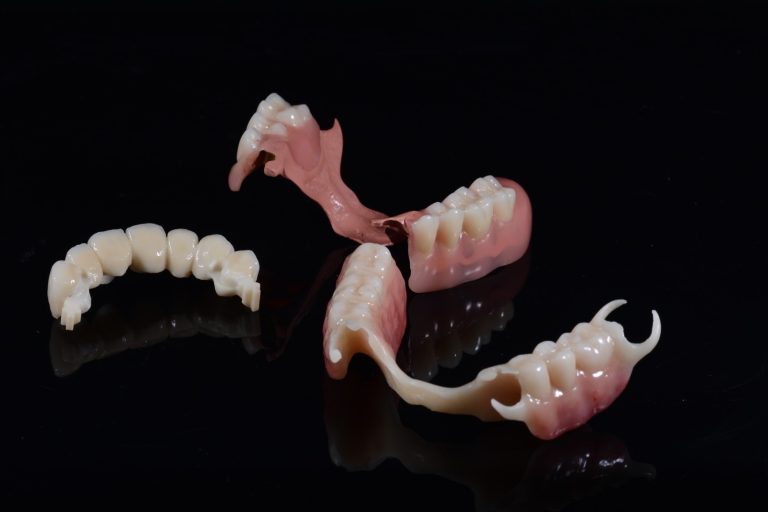
Removable Prosthetics – Traditional vs. Modern Approaches Traditional removable prosthetics are becoming less prominent due to their bulkiness and discomfort, and are often used only as a temporary solution. When chosen as a long-term option, the main reason is typically economic affordability.
Many patients struggle to adapt to these prostheses, which occupy more space in the oral cavity to ensure stability and retention. In contrast, dental implants offer a higher-quality solution: they provide greater stability and require less prosthetic volume, making them a more natural-feeling alternative compared to classic dental replacements.
A complete removable denture is used to replace all teeth in a fully edentulous upper or lower jaw, while a partial removable denture is intended to restore one or more missing teeth.
Fixed Prosthetics – The Gold Standard in Restoration Fixed prosthetic solutions are permanently cemented onto one or more supporting teeth and cannot be removed by the patient. This category includes crowns and bridges. Crowns help preserve natural teeth, correct positioning, and enhance aesthetics, while bridges are used to replace missing teeth.
Fixed prosthetics are widely regarded as the gold standard in restorative dentistry and can be applied in various degrees of tooth loss. However, their primary drawback is the need to grind down healthy adjacent teeth to serve as anchors, which may lead to increased sensitivity. Teeth without neighboring support may also experience gum recession, raising the risk of decay and fractures. Additionally, food can sometimes become trapped beneath these restorations, resulting in unpleasant odor.
To address these issues more permanently, dental implants are recommended. Implants prevent unnecessary damage to healthy teeth, eliminate food retention beneath bridges, and fully restore chewing, speech, and smile aesthetics.
In fact, implants should be considered the preferred solution over traditional methods such as crowns, bridges, or removable dentures. There are many reasons for this recommendation, primarily those that concern patient well-being.
Modern technology now enables procedures that were once unimaginable. Thanks to the expertise of our experienced dentists, these interventions have become routine—painless, efficient, and fast.
Choosing the Right Prosthetic Solution
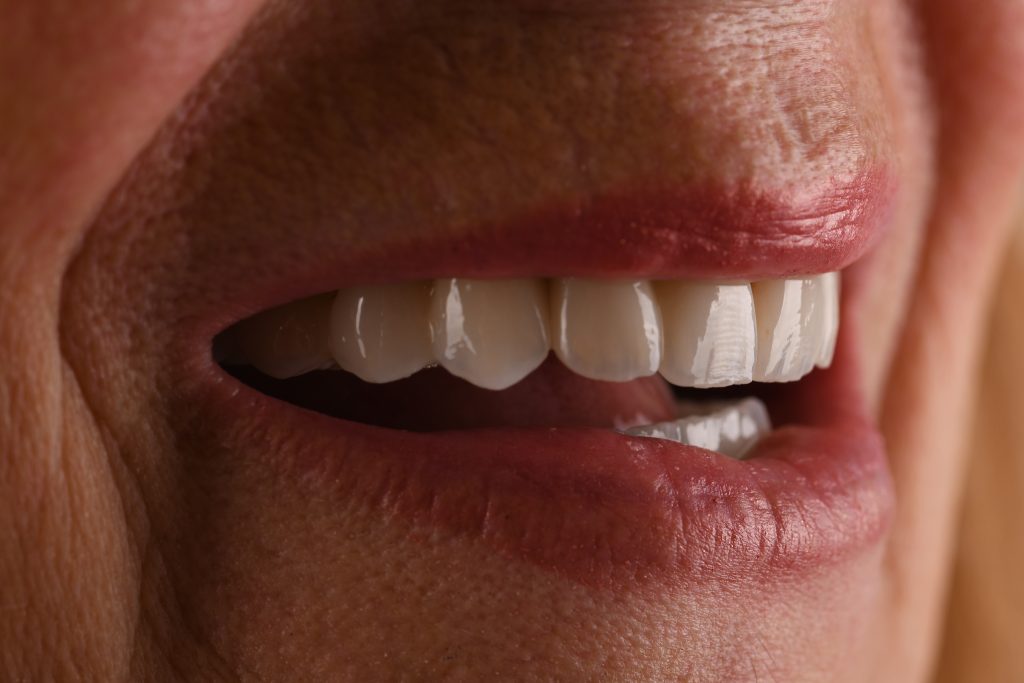
Following a thorough diagnostic examination and consultation, available options for restoring oral health are presented to the patient. Depending on individual needs, preferences, and clinical possibilities, treatment may include the placement of one or more crowns, bridges, veneers, or complete dentures.
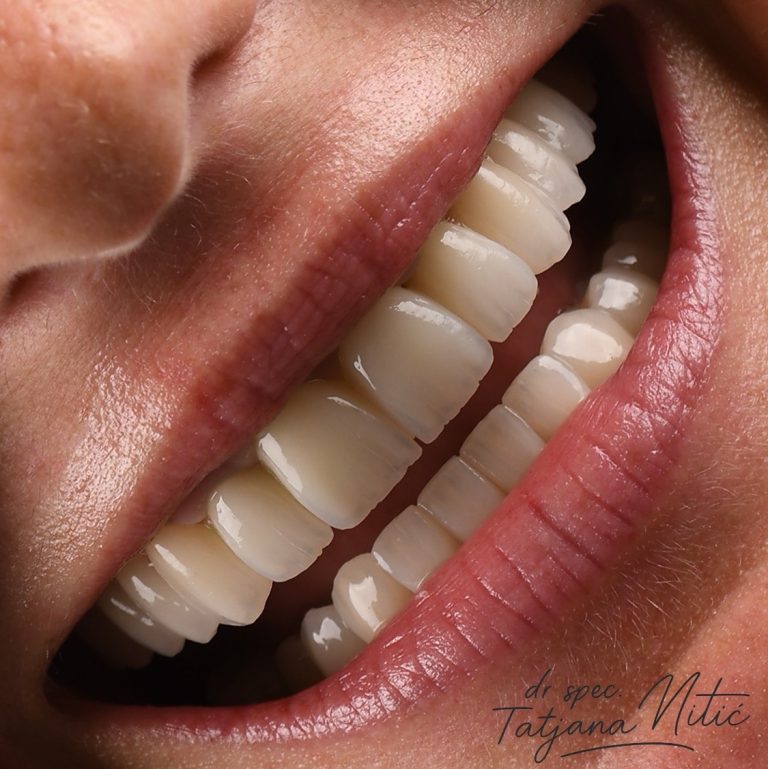
Crowns – Restoring Function and Beauty Crowns are prosthetic restorations that replace the function of damaged or missing natural teeth. They are used to restore teeth that are significantly decayed or entirely absent. Modern dentistry allows for the creation of crowns that look completely natural while being highly durable. They can be color-matched to blend seamlessly with existing teeth or contribute to the design of a brand-new, aesthetically enhanced smile.
Indications for Crowns: • Severely damaged teeth with extensive decay • Cracked or fractured teeth • Complete tooth loss – in combination with a dental implant • Smile makeover – replacing old crowns or covering visually unsatisfactory teeth
Bridges – Replacing Missing Teeth with Stability and Style Dental bridges are prosthetic solutions used to replace one or more missing teeth. They consist of multiple connected crowns anchored to healthy teeth on either side of the gap. Bridges restore chewing function, enhance the appearance of your smile, and prevent the remaining teeth from shifting out of position.
When Are Bridges Recommended? • When one or more teeth are missing in a row • When healthy teeth exist on both sides of the gap to act as supports • When the patient prefers not to get implants or is not a suitable candidate • To improve smile aesthetics and ensure proper bite distribution
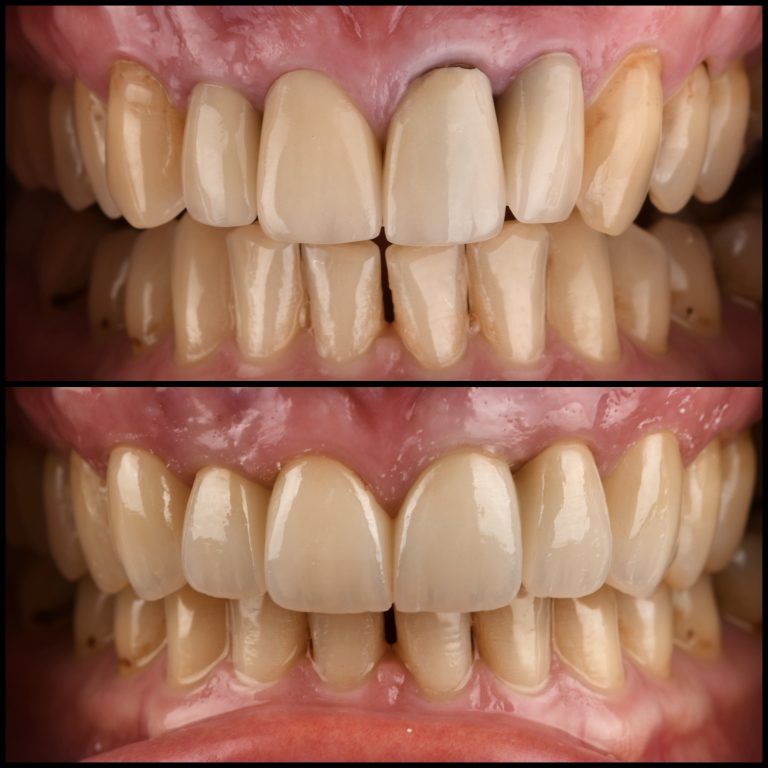
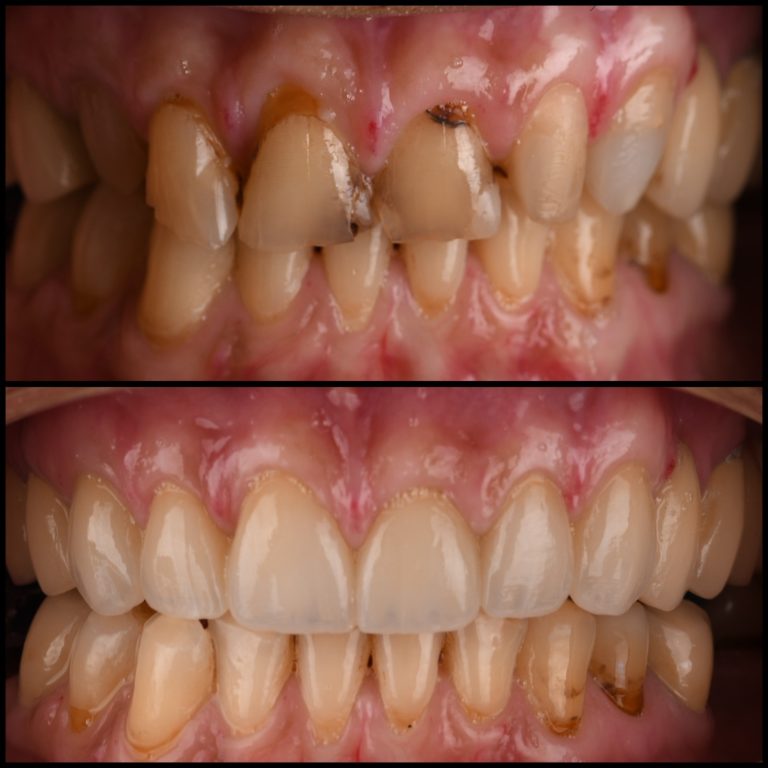
Ceramic Veneers – A Subtle Yet Striking Smile Enhancement Veneers are ultra-thin ceramic restorations bonded to the front surface of the teeth to significantly improve the aesthetic appearance of the smile. This method is especially popular among individuals with healthy teeth who desire a visual transformation without undergoing major dental procedures.
Veneers provide a natural-looking result while correcting various imperfections related to tooth color, shape, size, or position. Beyond their flawless aesthetic impact, veneers are durable, long-lasting, and require minimal enamel reduction prior to placement.
Indications for Ceramic Veneers: • Cosmetic enhancement of the smile • Teeth with irregular positioning • Chipped or worn teeth • Closing gaps between teeth
All-on-4 / All-on-6 – Implant-Supported Prosthetics for Complete Tooth Loss For complete edentulism, the most efficient solution is a denture supported by dental implants. Implants serve as a stable foundation, while the denture may be either fixed or removable depending on the clinical situation. Indication: Complete tooth loss
Biocompatible Materials – Safety Without Compromise Our prosthetic restorations are crafted using high-quality ceramic materials that are biocompatible, durable, and aesthetically superior. Depending on the clinical case, we select various ceramic types and substructures to ensure optimal function and appearance.
Metal-Ceramic Crowns – Reliable and Aesthetic These crowns are ideal for patients seeking a balance of beauty, durability, and affordability. • A strong metal base provides structural support • The ceramic layer completely covers the metal for a natural appearance • Suitable for individual crowns or bridges, regardless of their position in the jaw

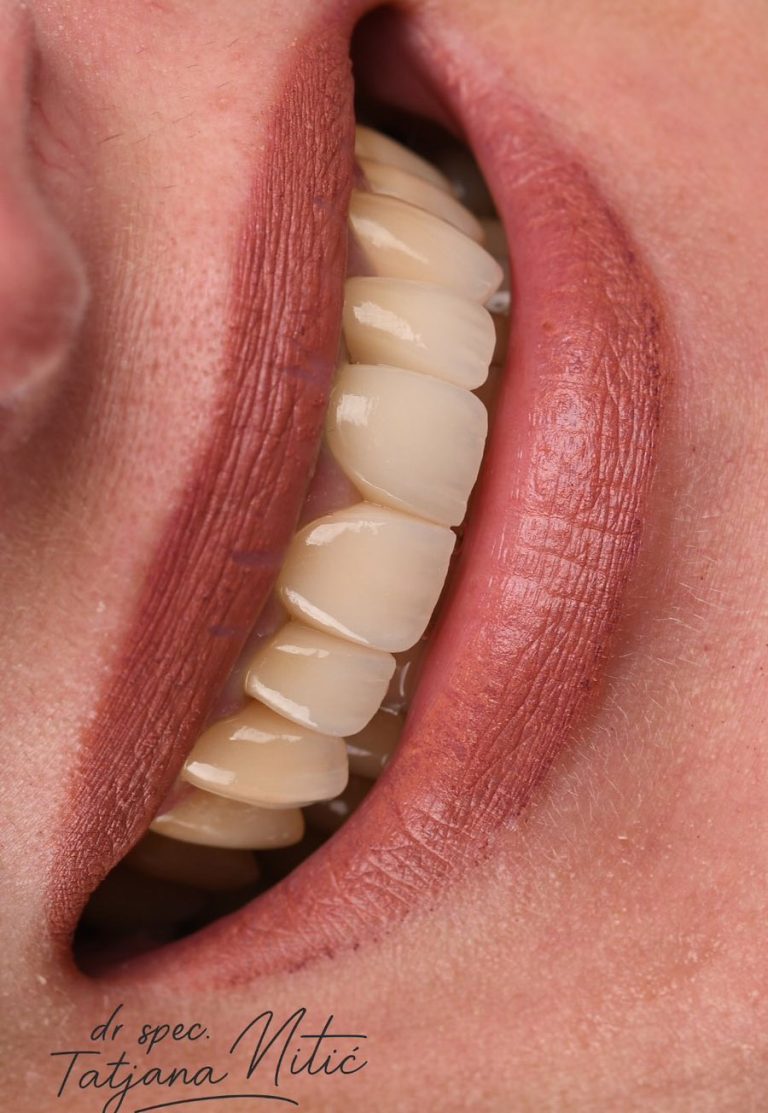
E.max Crowns (Lithium Disilicate Glass-Ceramic)
Unlike crowns with a dark metal base, E.max crowns offer exceptional aesthetics. • Their ability to reflect light mimics the natural structure of teeth • Ideal for use in the front part of the oral cavity • Can also be used for shorter bridges in that area • Manufactured through ceramic pressing and advanced CAD/CAM technology
Zirconia-Ceramic Crowns
Zirconium oxide crowns are considered one of the highest-quality aesthetic options in dentistry. • Provide outstanding appearance and natural coloration • Precisely shaped using CAD/CAM technology • Zirconium oxide is extremely strong, ideal for anterior esthetic restorations • Suitable for shorter bridges in the posterior region, depending on clinical indications • Their key advantages include superb aesthetics and durability—when properly selected and placed